Deck Repair & Restoration
Structural fixes, board replacement, and refinishing that adds safe years.
See the serviceDecks
Colorado hands you 300 sunny days and takes payment in UV, snow load, and frost heave. We design and build decks that keep the good half of that deal.
The service
A deck here lives a harder life than a deck almost anywhere: intense high-altitude sun that grays cheap lumber in two seasons, snow loads that test every joist, and frost-driven soil movement that heaves shallow footings out of level. Design for those forces and a deck becomes the best room in the house; ignore them and it becomes a maintenance project with a view.
Peak Elevation builds custom decks from the ground down — footings dug below frost depth, properly flashed ledger connections (the detail that fails in most deck collapses), engineered framing, and your choice of premium composite or select-grade wood decking with code-compliant railing systems. We handle design, permits, and inspections, and we build like the inspector is our toughest customer.
Colorado note
Front Range frost drives soil movement that will lift a shallow footing and rack a deck out of square. We dig and pour every footing below local frost depth per your jurisdiction's code, and we flash and bolt the ledger like the safety connection it is. Permits and inspections aren't red tape on our projects — they're a second set of eyes we welcome.
Deck rail systems
Railings are half safety hardware and half architecture — the piece of the deck you touch every day and see from every window. Colorado's UV, freeze-thaw, and snow load push cheap rails toward wobble and rot fast, so we spec systems that hold up at altitude and match the way you actually use the deck: view-first, privacy-first, or budget-first.
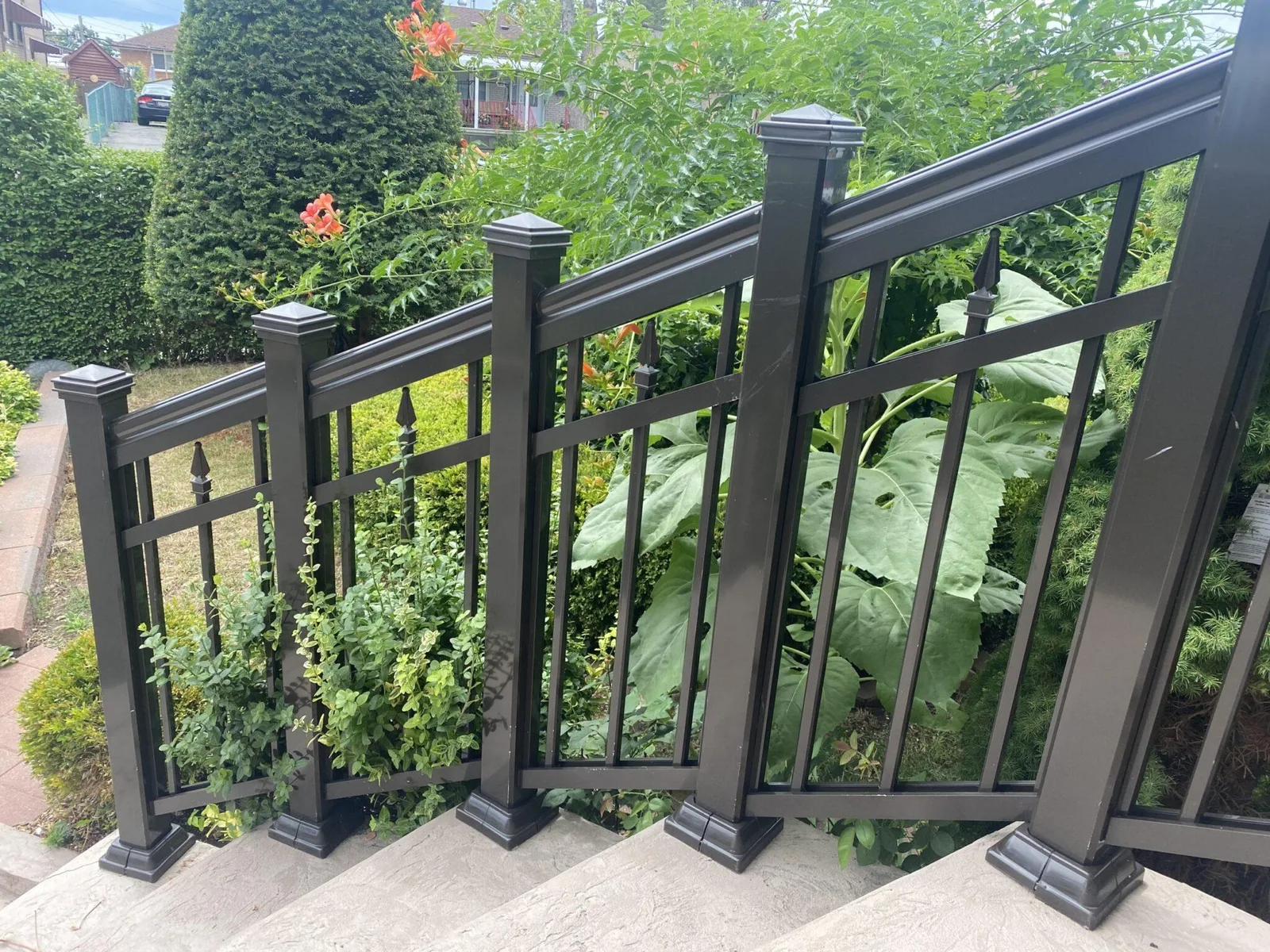
Powder-coated aluminum rails come in the widest range of colors and picket profiles, don't rust, and effectively don't need refinishing at altitude. Black, white, bronze, and clay finishes are baked on in the factory, so they hold their color under UV that would fade a brush-painted rail in a couple of seasons.
Stainless cable infill between metal or wood posts nearly disappears against a mountain or backyard view. It's the right choice for hillside decks where a picket line would slice up the scenery. Cables must be tensioned correctly and posts anchored for lateral load — cheap cable installs go slack in a season.
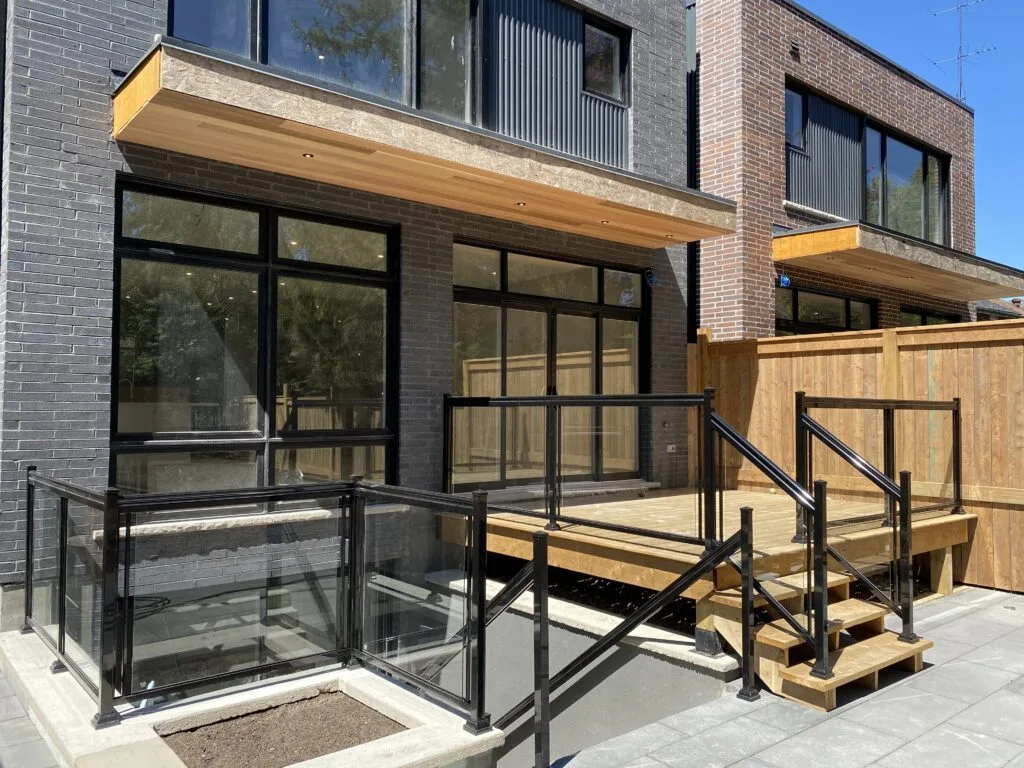
Tempered glass panels — framed or frameless — give an unobstructed view with a clean, contemporary look. Framed glass in an aluminum system is more affordable and easier to service than frameless; frameless demands thicker glass and heavy-duty hardware. Both are dead flat to clean and last essentially forever if the hardware is stainless.
Built with the deck out of the same species, wood rail is the least expensive option and looks right on cabin-style and traditional decks. Trade-off: it needs the same 1–3 year refinishing cycle Colorado UV forces on any wood outside, and hardware needs to be stainless or hot-dip galvanized to survive freeze-thaw.
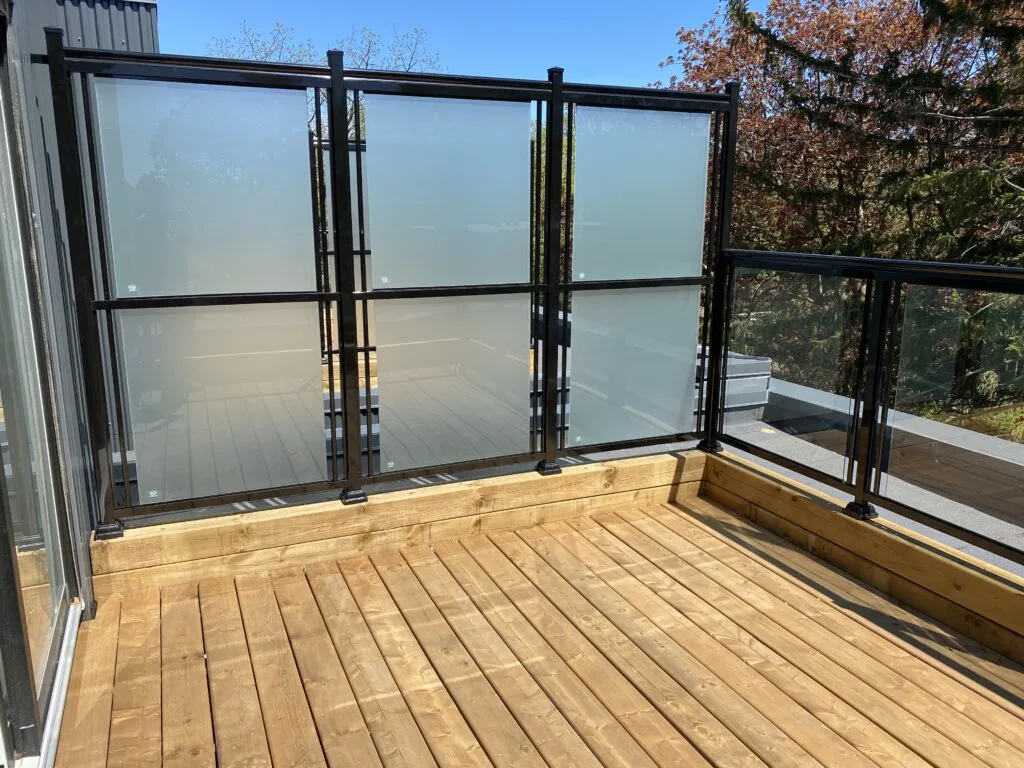
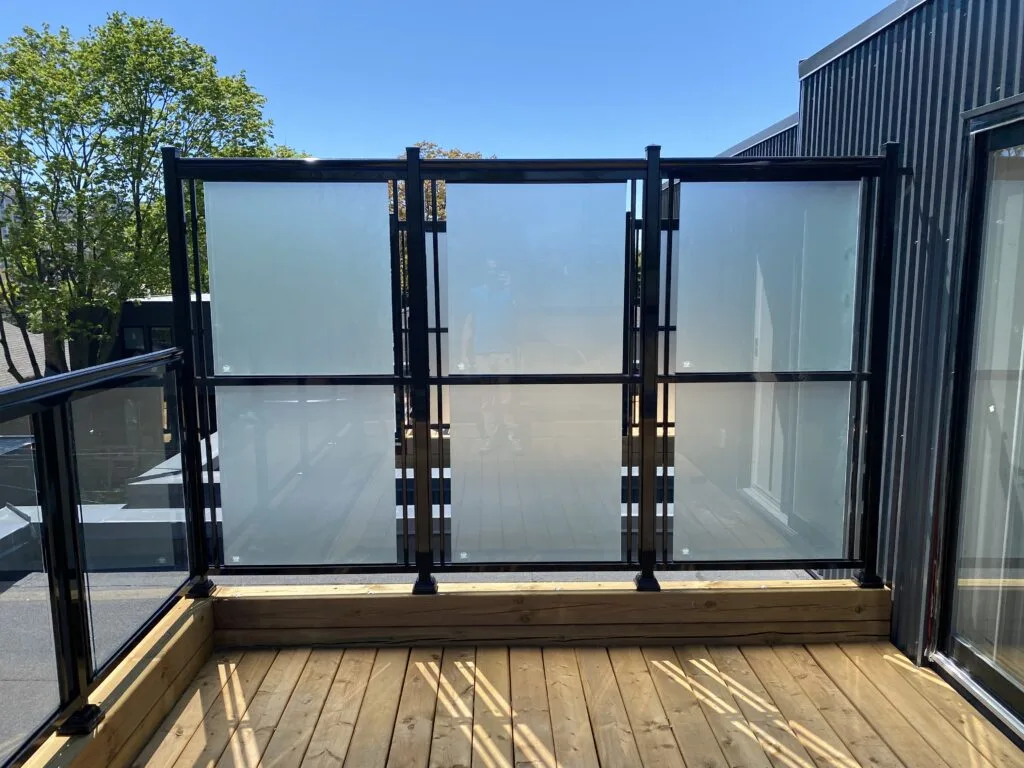
On tight lots we mix a solid or frosted-glass privacy panel where the neighbor is close, and a clear-glass or cable section where the view matters. Same rail system, two purposes — a design move that beats one long fence-height wall around the whole deck.
Every rail we install is 36 or 42 inches tall depending on deck height, with picket or cable gaps under the 4-inch code max so kids and pets stay put. Posts are through-bolted to framing, bolts are stainless or galvanized, and we shake-test every panel before we walk off — a rattle means a screw isn't done.
Scope
Choices
Capped composite boards from leading manufacturers — fade- and stain-resistant, splinter-free, and built for high-UV exposure. Wash it, don't refinish it.
The warmth only real wood delivers, in select grades, installed with stainless fasteners and finished with penetrating UV-rated stain.
Wrapped stairs, benches, pergolas, privacy screens, and lighting — designed as one composition, not bolted-on afterthoughts.
How we work
Good questions
Composite wins on maintenance: high-altitude UV forces wood into a refinishing cycle every 1–3 years, while capped composite needs washing. Wood wins on upfront cost and natural feel. We'll show you both against your budget and how long you plan to own the home — total cost of ownership usually decides it.
In nearly every Front Range jurisdiction, yes — decks are structural, and railings, stairs, and ledger connections are code items for good reason. We produce the drawings, pull the permit, and schedule inspections as part of the project. You get a deck with paper, which also matters at resale.
Once permits are in hand, most single-level decks take one to two weeks on site; multi-level or feature-heavy builds run longer. Permit review time varies by city — we'll give you a realistic full-timeline at proposal, not just the build days.
Often, yes. Footings can be dug and poured most of the year, and framing proceeds in cold weather fine. Some finish steps like staining need temperature windows. Off-season builds frequently mean faster permits and scheduling — worth asking about.
Pairs well with
Structural fixes, board replacement, and refinishing that adds safe years.
See the servicePremium coatings and full prep, built for high-altitude sun and freeze-thaw.
See the serviceFiber cement, engineered wood, steel, and vinyl — hail-tough and fire-wise.
See the serviceFree estimates · No pressure
Free on-site walk-through, a written line-item quote, and honest advice — even when the honest advice is a smaller job.