Your privacy choices

Booking and estimate requests work without optional tracking. Tracking starts off on each page load. Allow analytics and session replay for this page, or choose advertising separately.

A saved choice never turns tracking on after a reload. Change or withdraw permission using “Privacy choices” in the footer; changing loaded tracking reloads the page with tracking off. Read our privacy notice.

Skip to content
Peak Elevation ExteriorsPlan a roofing visitBook
Colorado public agencies · Facilities teams · General contractors

Public-facility roofing. Start with the requirements.

Roofing scope and bid review for Colorado municipal and public facilities. Send the solicitation, plans, prebid requirements and deadline for a project-specific eligibility review.

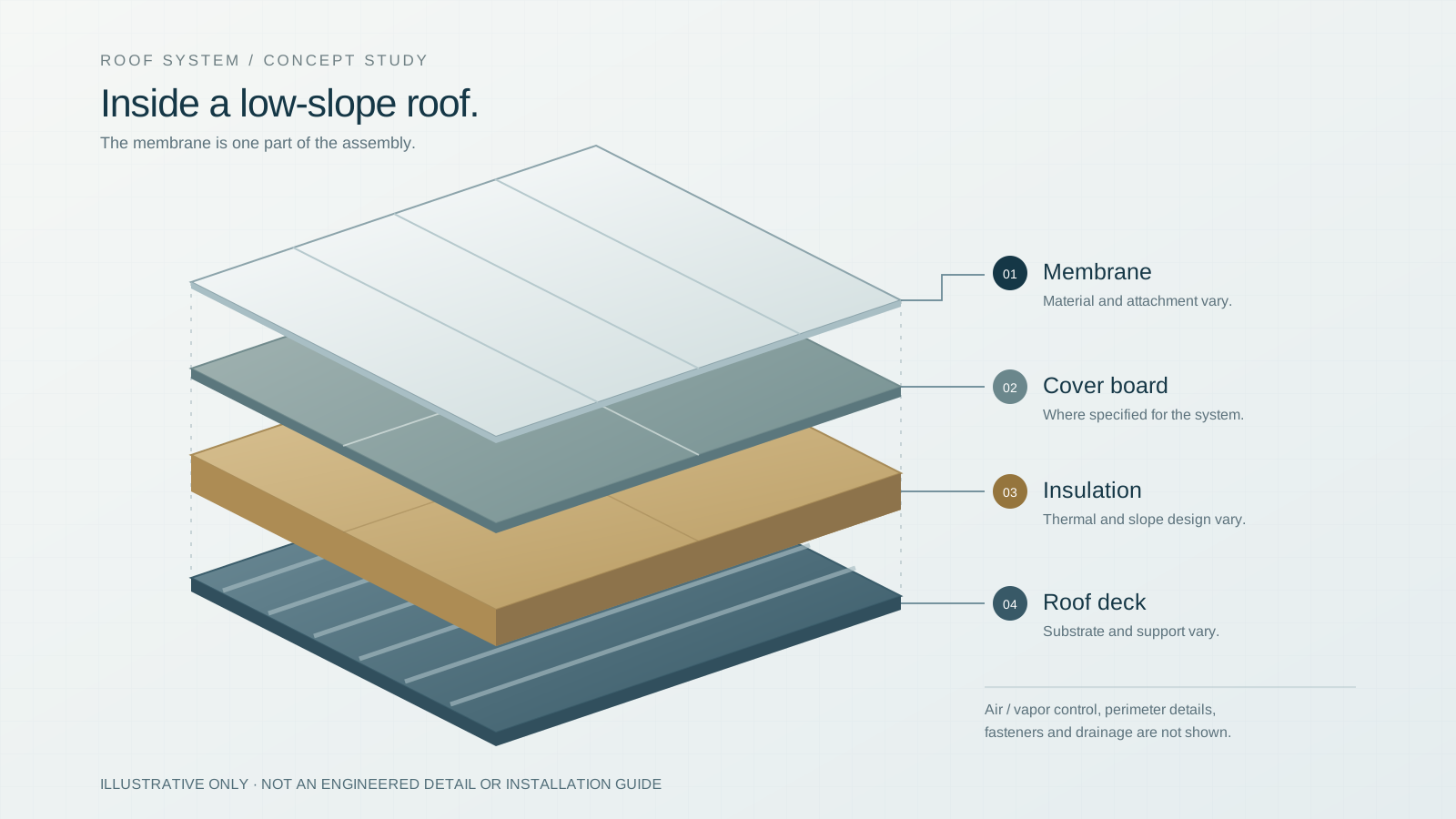
Illustrative low-slope roof assembly with a membrane, cover board where specified, insulation and roof deck. Not an engineered detail.
Example low-slope roof assembly. Illustrative only; not an actual public facility or a project design.
Public work starts with the requirements

The building.
The bid requirements.

Public projects start with a complete solicitation, not a general promise of readiness. Peak reviews the roofing scope and procurement requirements before confirming whether it can submit a bid or participate through a general contractor. Share the package early enough to review every required document.

  1. 01REVIEW

    Review the bid before the price

    Send the invitation or RFP, roof plans, specifications, addenda, bid form and deadlines. Flag mandatory site visits, question periods, approved communication channels and electronic submission instructions at the start.

  2. 02COORDINATE

    Confirm the required evidence

    We check requested licenses, registrations, insurance limits and endorsements, bond requirements, references and other eligibility conditions against the opportunity. Missing evidence must be resolved before making a compliance declaration or confirming participation.

  3. 03DEFINE

    Plan for an operating facility

    Review public access, tenant or staff notices, security, deliveries, roof access and HVAC or drain coordination. The proposal and work plan must account for site restrictions and required inspection, punch-list and closeout steps.

Public-facility roof procurement file

Make the roof scope reviewable. Make the response complete.

Public roofing work connects an owner’s technical scope with a specific procurement process. The following questions organize that review; they do not establish that any company is qualified for a particular solicitation.

Technical reference reviewed

Where should a public-facility roofing review begin?

Begin with the issuing owner’s complete solicitation and the exact route for documents, questions and submission.

Read full answer: Where should a public-facility roofing review begin?

Identify the agency or municipality, solicitation number and person designated for procurement questions. Download the issued attachments and record the current deadline and submission method from that package. Colorado VSS explains that it does not contain city and county solicitations; Colorado Springs separately identifies its Rocky Mountain E-Purchasing route. An opportunity listing elsewhere is a lead to the owner’s process, not the complete governing package.

Create a document register and confirm whether additional specifications, site information or contract terms are incorporated by reference. Record access problems early through the stated support or buyer contact. Do not assume that viewing a public notice registers a bidder, obtains all attachments or satisfies a required event. Keep the actual owner instructions available throughout estimating so the submission is built around the correct project.
How should project-specific qualifications be checked?

Read the solicitation’s eligibility requirements and verify current evidence before representing that a bidder meets them.

Read full answer: How should project-specific qualifications be checked?

Look for required licenses or registrations, prior project experience, manufacturer requirements, insurance, bonding and any owner-specific prequalification. Identify which records are required with the response and which are required at a later stated milestone. Denver publishes construction prequalification rules for contracts within its applicable process; that example should not be turned into a universal rule for every Colorado municipality.

Create an evidence checklist with a responsible person and an unresolved status where proof is missing. Do not substitute a planned insurance purchase, a brand logo or an undocumented prior-company project for the specific evidence requested. If the solicitation is unclear about acceptable experience or a qualification, ask through its authorized clarification route. This notebook supplies a review method; it does not certify Peak or any other bidder as eligible.

What should happen to site-visit observations and bid clarifications?

Record observations, ask timely questions through the stated channel and reconcile every issued written change with the response.

Read full answer: What should happen to site-visit observations and bid clarifications?

Check whether a visit, conference or registration is mandatory, and follow the solicitation’s attendance and identification instructions. Use the visit to map roof areas, occupied access, equipment and visible conflicts. Keep observation notes distinct from an owner direction. A conversation can identify a useful question without itself changing the contract documents or resolving an ambiguity for all bidders.

Track issued addenda and the quantities, products, schedule or forms they affect. The State Architect’s procurement overview describes written addenda and acknowledgment within the state construction process; the actual solicitation supplies the relevant project instructions. Recheck the document register and submission package before delivery. If a change cannot be reconciled, preserve the question and seek the authorized answer rather than inserting an unstated assumption into the bid.

What makes the technical roofing response understandable to a public owner?

Connect the proposed roof assembly and work boundaries to the issued specifications, details and required bid structure.

Read full answer: What makes the technical roofing response understandable to a public owner?

Organize the takeoff by roof area and keep supporting-layer work, edges, drains, penetrations and related trades visible. Compare the selected products and assembly against the specification before relying on a supplier quote. Identify design or investigation questions that remain open and address them through the prescribed process. A low number without a traceable scope does not tell the owner what work has actually been included.

Use the required forms and distinguish the base scope from permitted alternates or unit-price items. Confirm how the solicitation handles substitutions, exclusions and qualifications rather than assuming they may be attached freely. Keep product references and actual qualification evidence separate from marketing claims. Manufacturer document libraries can support technical review, but a downloaded specification is not an issued project approval or evidence of installer authorization.

How should facility operation and closeout be planned for a public building?

Define access, protection, communications and the records the owner needs to operate and maintain the completed roof.

Read full answer: How should facility operation and closeout be planned for a public building?

Ask the facility team about occupied entrances, public routes, scheduled events, deliveries, sensitive equipment and areas with restricted access. Connect those constraints to the proposed phasing and coordination responsibilities. Public access cannot be treated as an empty staging area merely because a roof is ready for work. Check the contract’s safety and operational requirements and identify the responsible parties before setting a work sequence.

At closeout, organize required inspections, final product and detail records, accepted changes, maintenance information and actual issued coverage. Use the owner’s required format and keep open items traceable to a responsible party. Colorado Springs publishes separate construction-contract and contractor-safety references, illustrating why the owner package needs review alongside the roof specification. Final acceptance and payment follow the actual contract; this guide does not supply a universal timeline or approval promise.

Compare proposal details
Proposal comparisonA solicitation-to-closeout responsibility file
File tabReview before committingEvidence to retain
SolicitationOwner, scope, deadline and submission routeComplete issued document set
EligibilityProject-specific qualifications and required evidenceCurrent records and written determinations
Technical responseAssembly, quantities, alternates and clarificationsTraceable scope and acknowledged changes
Delivery / closeoutOccupied operations and contract deliverablesAccepted records, inspections and open-item list

Planning example only. Each owner’s issued solicitation, contract and applicable requirements control its procurement and project.

These original planning notes explain what to ask and document. They do not diagnose a building, supply an engineered design, set code requirements or establish contractor or warranty eligibility. Confirm the current documents and review responsibilities for the actual project.

Existing building

A leak, an aging roof
or a capital plan?

Send the property location, leak history, available roof records and your operating requirements. We discuss the assessment and project options.

Request a building review
Plans & procurement

A plan set
and a bid date?

Share roof plans, specifications, addenda, forms and any required site visit or qualifications. We confirm project fit before committing to a bid.

Send plans for review
Explore roofing materials

The surface you see.
The system beneath.

Get a closer look at shingles, metal, tile and commercial membranes. Rotate a sample, separate its layers and see what goes into the roof.

Roof material studioPreparing sample
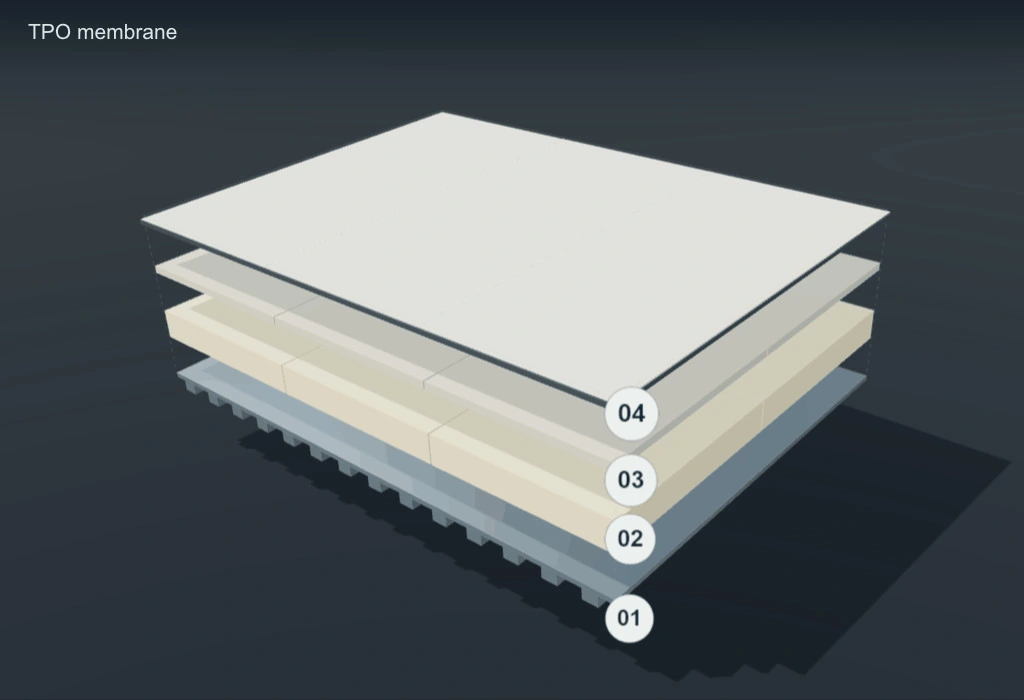
TPO example roof assembly with four separated layers
Low-slope example assembly

Drag to rotate. Select a numbered layer to look closer.

Commercial / low-slope roofs

TPO roofing systems.

A thermoplastic membrane with heat-welded seams and a light-colored finish. The right assembly coordinates membrane attachment, insulation, edge metal and drainage for the building.

What we review with you
  • Membrane thickness & attachment method
  • Insulation, cover board & drainage design
  • Welded seams, curbs & perimeter details
Explore TPO roofingDiscuss this material

Simplified example assembly. Not to scale or an installation detail. Actual layers, attachment, flashing, ventilation and drainage depend on the building, selected products and project requirements. Reflectivity and performance depend on the selected product and assembly.

Roofing manufacturers

More choice for your roof.

Compare products from established roofing brands. Our team helps you choose the materials, colors and assembly for your property.

Make the scope traceable

A roof area is a quantity.
The details complete the scope.

Assemblies, edges, drainage and access need their own place in the project review.

EXAMPLE ROOF-ZONE MAPA schematic roof divided into zones, perimeter edges and rooftop detailsA conceptual plan shows roof zones A and B, a perimeter line, a roof curb and drain locations. It does not depict a measured property.ABPERIMETER / LINEAR SCOPEROOF CURBDRAIN
Roof zones & assembliesEdges & perimeterCurbs & drainage

Schematic example only. Confirm the actual roof geometry, assemblies and details from the project documents and field review.

  1. 01

    Complete solicitation, addendum and bid-form review

  2. 02

    Mandatory prebid attendance and question deadlines

  3. 03

    License, registration and reference requirements

  4. 04

    Required insurance evidence, endorsements and bonds

  5. 05

    Site access, public protection and facility coordination

  6. 06

    Submission checklist, inspections and closeout obligations

Additional work and concealed damage follow the authorization process in your written agreement.

For property owners, managers & general contractors

A proposal your team
can work with.

Plans and measurements support the estimate. Assemblies, quantities, field conditions and exclusions make it useful.

EXAMPLE DELIVERABLE STRUCTURERoofing scope & quantity scheduleExample format · use your project’s measurements
Example roofing quantity schedule format
Scope itemUnitReview basis
Roof area by assemblySFPlans + field review
Perimeter & edge metalLFRoof zones + details
Curbs & penetrationsEADetails + site conditions
Insulation & taperSF / layersAssembly schedule

Drawing revisions · Addenda · Alternates · Exclusions · RFIs

From plan set to project scope.

We use available HOVER and EagleView measurements with drawings, specifications and site information to organize the work. Quantities, waste allowances and pricing assumptions should remain traceable.

  • Roof zones and specified assemblies
  • Access, occupied areas and staging
  • Qualifications, open questions and alternates
  • Agreed closeout and warranty documents
Commercial plans & takeoffs Municipal & public procurement
Have plans or a building to review?

Let’s look at your roofing project.

Send the location, roof information and project timing.

Discuss the project
Roofing questions, answered

Municipal & Public-Facility Roofing: your questions.

Have a question about your property?
Talk with our team

Is Peak prequalified for every Colorado public roofing contract?

No blanket prequalification is claimed. Eligibility, references, registration, licensing and financial or insurance requirements differ by solicitation. We review the package and confirm whether requirements can be met before committing to a bid.

What should an agency or GC send for review?

The solicitation link or complete documents, project location, roofing drawings and specifications, addenda, bid deadline, mandatory visit details and required bidder qualifications. Include insurance, bonding and reference forms rather than a summary alone.

Can you provide the required insurance and bond documents?

The exact limits, endorsements, bond forms and timing must be reviewed with the relevant agent or surety for the project. A general certificate does not establish every required endorsement, and a bond is not assumed available without confirmation.

Can you price a roofing scope as a subcontractor?

Send the GC bid package, roof scope boundaries, schedule and subcontract requirements. We review system fit, required qualifications and deliverables before confirming participation. Do not list Peak as committed until that review is complete.

Which procurement rules apply?

Use the issuing agency's solicitation, written addenda and applicable requirements for the project. State guidance is a useful reference; municipal, school, special-district and federally funded projects may have different procedures and contract conditions.

Let’s talk about your roof

Your building.
Your plans.
Let’s review them.

Send the location, roof information, plans and bid date. Our team will review the package and confirm project fit.

(720) 325-9473

Active leak? Call to confirm availability.

Start your roofing project

Request a project review.

Tell us where and what you need. No obligation.

Add project details, plans or bid date (optional)

Prefer email? Send photos or plans directly.

Call (720) 325-9473 Text us Email us