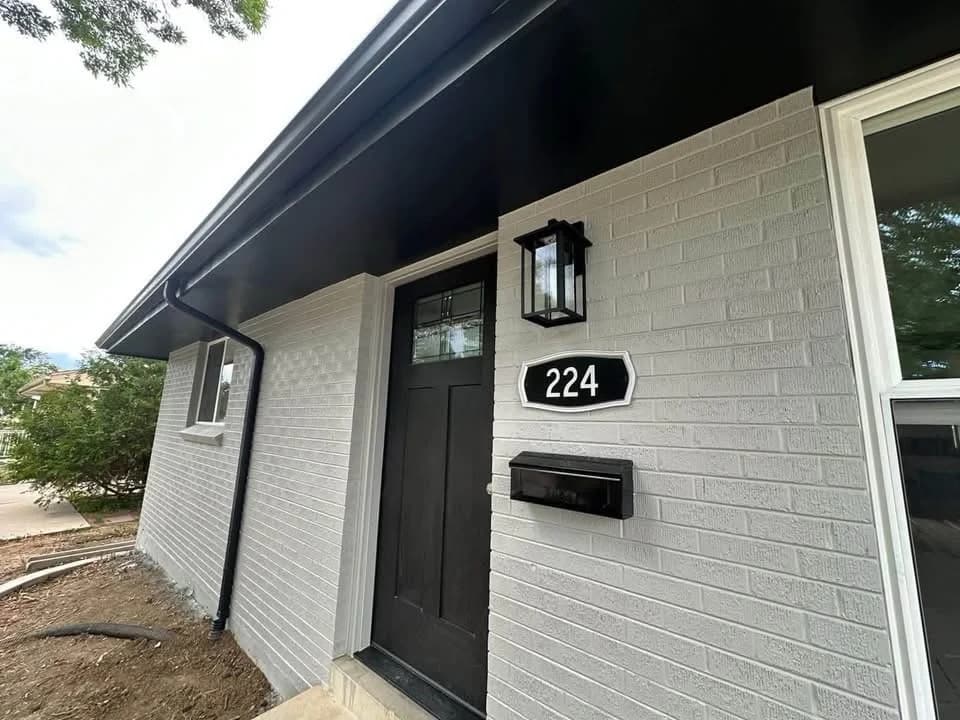
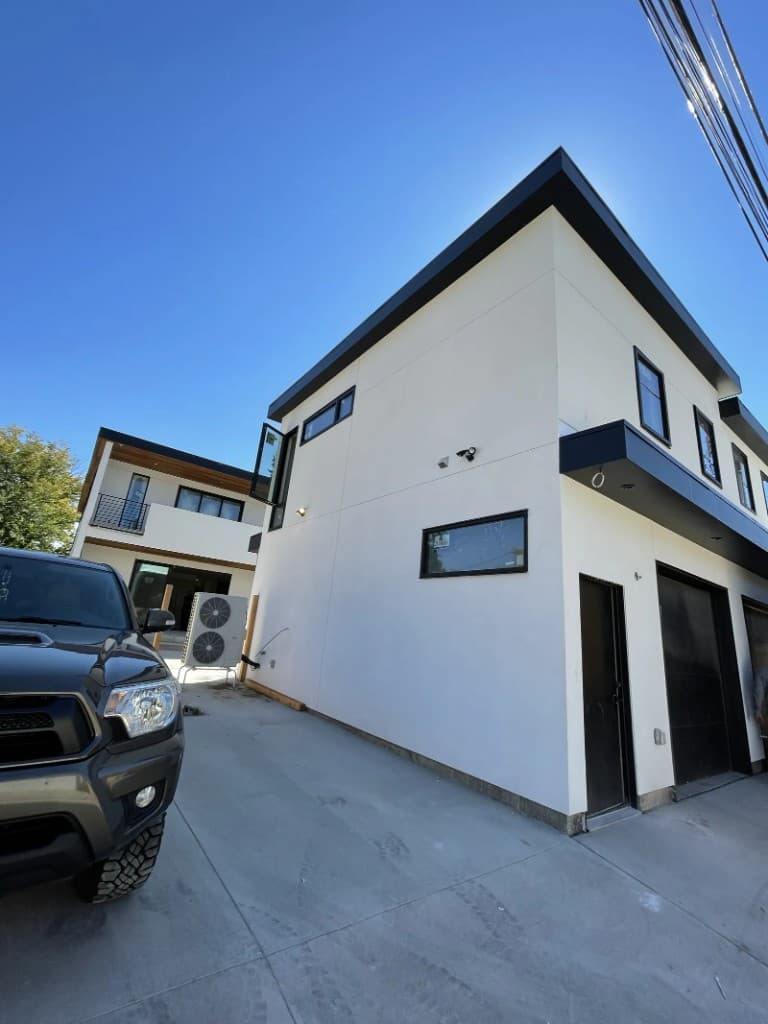
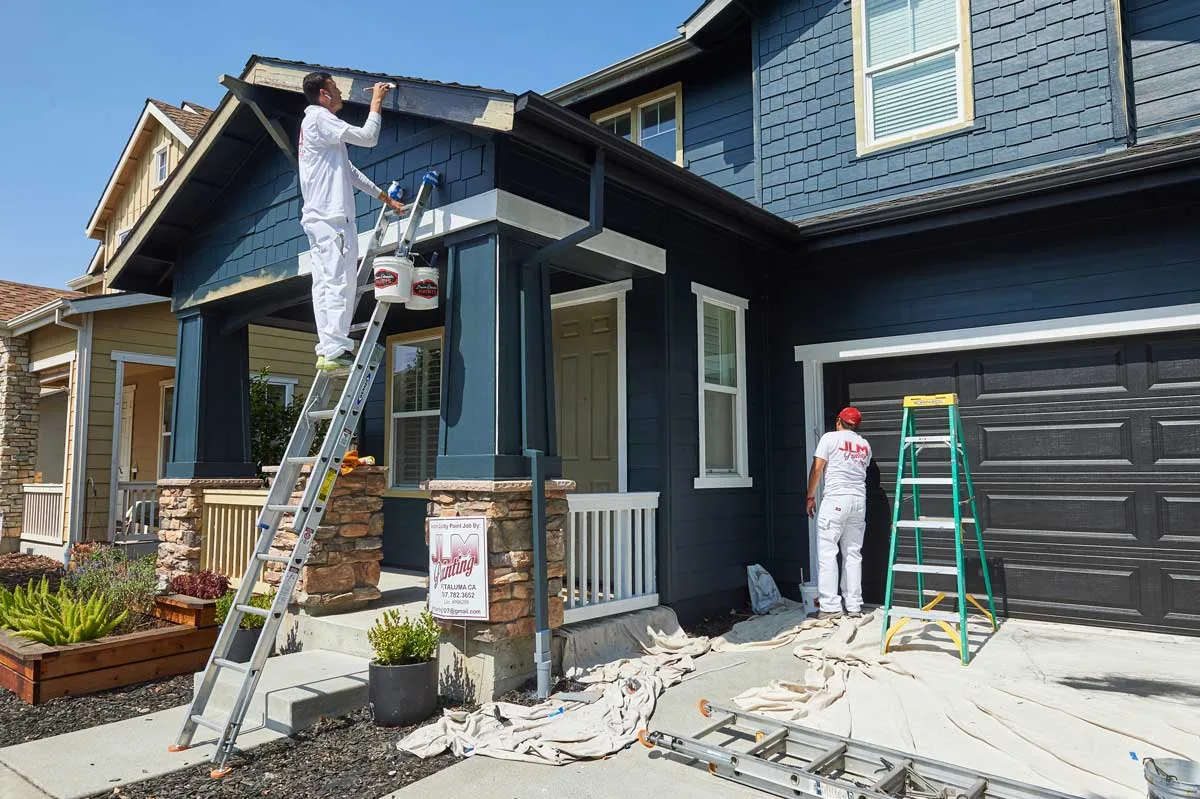
Follow the work, from preparation to the final details. Your quote defines which steps and surfaces are included.
How the work comes together01 / 04
Illustrative work stage · Protected areas & sound surfacesExplore this step in detail +
Work detailProtected areas & sound surfaces
Illustrative work sequence. The drawing explains coating layers on a small wall area. Exterior preparation and application depend on the actual substrate, weather and selected products.
01 / Protected areas & sound surfaces
Protect and prepare the exterior
Protect the agreed nearby areas, clean the included surfaces and remove failing material within the accepted scope.
Complete approved patching, sanding and suitable joint preparation before coating.
Resolve recurring water entry or unsound siding separately. Not every joint or opening is meant to be sealed.
02 / Bare, repaired or specified areas
Prime the areas that need it
Apply the selected compatible primer to the areas required by the accepted coating system.
Wood, metal, stucco and masonry can need different preparation and products.
Surface and weather conditions must suit the selected product before finish work proceeds.
03 / Body, trim & selected accents
Apply the specified finish coats
Coat the accepted body, trim, doors and accent areas in the selected colors and products.
Application and recoat requirements follow the actual coating system, substrate and weather conditions.
Keep adjoining roofing, windows, planting and unpainted surfaces protected as agreed.
04 / Finish details & site cleanup
Complete the details and review the work
Review the painted surfaces, complete agreed touch-ups and remove protection and debris.
Check the included edges, repaired areas and separate color boundaries with the written scope.
Keep the product and color information and discuss the coating's care and cure requirements.
Your project starts here
What do you want to work on?
Choose the closest starting point. We’ll include it with your request so the first conversation starts with your project.
Useful details to includeInclude the sides and surfaces, peeling or damaged areas, material, height, color scheme and any association requirements.
Exterior Painting in Denver metro: start with the actual problem.
Preparation determines whether a finish can hold up. Soft trim, loose coatings, and moisture issues should be identified before paint is applied. We explain the preparation and coating scope so the quote is more useful than a single headline price.
When to request an inspection
Peeling, chalking, or faded exterior paint
An exterior repair needs a matching finish
A home needs a fresh color scheme
What affects your quote
Surface area, height, and access
Washing, scraping, caulking, and repairs
Coating system, trim detail, and color changes
How to prepare for your estimate
Share existing colors and HOA rules. Point out peeling or water damage and let us know about landscape or access restrictions.
Get a written scope before scheduling work. We discuss materials, the repair area, access, and any related work so you can compare your options.
30-minute property visit. Work is quoted and scheduled separately.
The service
Exterior Painting for Front Range conditions
Exterior paint in Denver fails in predictable ways: south and west faces chalk and fade under high-altitude UV, caulk joints split through freeze-thaw, and any coat applied over glossy or peeling layers lets go in sheets. None of that is bad luck. All of it is prep and product.
We clean the exterior, scrape and sand failing paint, repair the agreed areas, and prime bare or repaired surfaces as needed. We apply compatible coatings to the body, trim and accents, protecting nearby roofing, windows and landscaping. Sealant goes only where the surface and drainage detail call for it.
Colorado note
Painting season has rules here
Exterior coatings need surface temperatures inside the manufacturer's window — including overnight, when Colorado likes to drop 35 degrees. We schedule the work around the coating's application and drying temperatures, checking the forecast and surface conditions before painting.
Your exterior
Why exterior paint matters
Curb appeal is real, but paint is also the sacrificial layer between your siding and Colorado weather. These are the signs we see on walk-throughs when a repaint is overdue — or when homeowners are simply ready for a better look.
Peeling, cracking, or bubbling paint
Lifted paint exposes wood, stucco, and trim to rain, snow, and sun. On the Front Range that turns cosmetic flaking into moisture intrusion, mildew, and dry rot faster than most owners expect.
Failed caulk at doors and windows
Sealant hardens and splits through years of UV and freeze-thaw. Hairline gaps can be re-caulked; larger cracks usually mean fresh elastomeric sealant and a protective paint film on top before water gets behind the trim.
Sun-faded color
High-altitude UV bleaches pigment — especially on south and west faces and on darker color choices. A properly prepped repaint restores the look you want and puts real UV-rated pigment back in the protective coat.
You're ready for a new palette
Sometimes the finish is sound but the scheme isn't: dated trendy colors, weak trim contrast, or an HOA update. That's a valid reason to repaint — with large swatches and on-wall samples so Colorado light doesn't surprise you.
The protective film is wearing thin
Paint isn't decoration alone — it's the first barrier against hail scuffs, chalking, and temperature swings. When that film thins or powders off, you're losing defense along with curb appeal. Cleaning, repairs and a compatible coating renew that protection.
Local
Serving these cities
Free on-site estimates across the Denver metro — tap your city for local details.
Compatible sealant at the joints and penetrations that need it
Exterior topcoats selected for the surface and exposure
Landscape, roof, and hardscape protection
Body, trim, and accent scheme consultation
Choices
Options & materials
Complete
Full Exterior Repaint
Body, trim, fascia, doors, and accents in a coordinated scheme — the whole envelope, prepped and finished as one system.
Targeted
Trim & Accent Package
Fascia, window trim, shutters, and the front door — the high-contrast details that carry most of the curb appeal.
Surfaces
Stucco & Masonry Coating
Breathable, flexible coatings for stucco and brick that bridge hairline cracks and stand up to sun-side exposure.
Trusted materials
Brands we install & specify
We install and specify nationally recognized siding, steel, paint, and decking lines — sourced through trusted partners including James Hardie, Sherwin-Williams, Trex, USBS Building Supply, Lansing Building Supply, and Service Partners — matched to your project and Colorado weather.
Brand names and logos are trademarks of their respective owners. Peak Elevation Exteriors is an independent contractor and not affiliated with or endorsed by these manufacturers unless noted in writing.
How we work
Four steps. A clearer plan.
Good questions
Questions homeowners ask
How long does exterior paint last in Colorado?
Coating life depends on preparation, the surface, product and exposure. Sun-facing walls and horizontal trim often need attention sooner. We can help you assess the current finish and plan maintenance using the selected product's guidance.
When is exterior painting season in Denver?
Roughly late spring through early fall, when day and night temperatures stay inside coating specs. In shoulder months we work sun-side and monitor overnight lows. If a week isn't paintable, we'll tell you and reschedule — calendar pressure is not a coating spec.
Will you fix wood rot and damage before painting?
Yes, where that repair is part of the job. We identify visible damage to fascia, trim and siding before painting and price the repair separately. Hidden damage or structural problems may require more work or a specialist before coating can begin.
Spray, brush, or roll?
Usually all three: spray for even film build on body surfaces, back-roll to work coating into texture, and brushwork on trim and detail. The method serves the surface. What we never do is a one-pass fog coat that photographs well and fails early.
What affects the price of exterior painting?
Surface area, height, and access; Washing, scraping, caulking, and repairs; Coating system, trim detail, and color changes. We inspect the property before giving a written project quote.
How should I prepare for my Exterior Painting estimate?
Share existing colors and HOA rules. Point out peeling or water damage and let us know about landscape or access restrictions.
Understand how surface condition, coating instructions, shaded elevations, drying conditions and weather delays should be handled in an exterior painting proposal.
Exterior painting on Denver and Front Range homes — surface prep for stucco, fiber cement, and wood; primer strategy; Sherwin-Williams and Benjamin Moore systems for high-altitude UV.