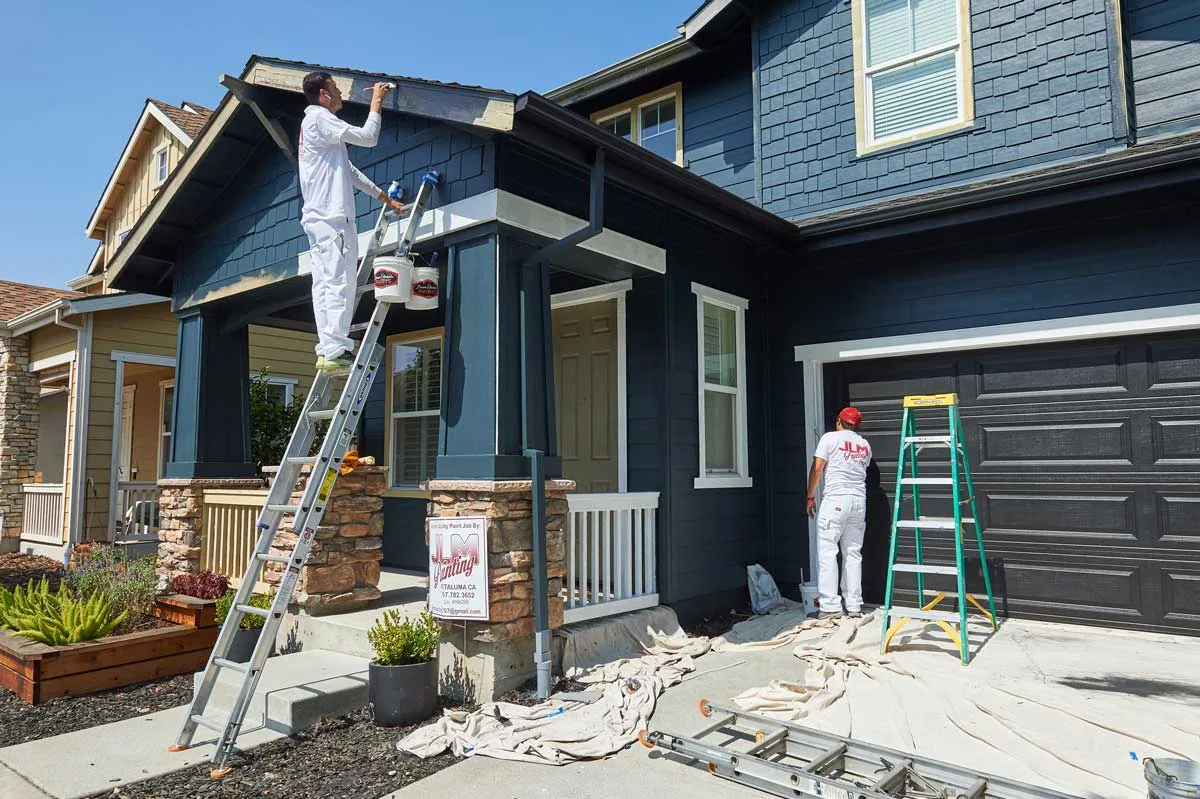
Colorado exterior paint fails from the inside out — bad prep, wrong primer, or a bargain gallon that cannot handle UV at 5,280 feet and daily freeze-thaw in spring and fall. The color looks fine the first year. By year three the south elevation is chalking, caulk joints at the trim are opening, and the stucco cut lines are hairline-cracking because movement was never sealed.
This guide is how we approach full exterior repaints on Denver metro homes: inspect substrate, fix what's failing, prime correctly, and apply Sherwin-Williams or Benjamin Moore systems specified for the surface — not one generic flat over everything.
Prep is most of the job
Pressure wash — Remove dirt, mildew, and chalking binder. We do not paint over loose powder.
Scrape and sand — Alligatoring, peeling, and failed edges back to solid film or bare substrate.
Caulk — Windows, doors, corner boards, siding transitions. Colorado movement demands quality polyurethane or siliconized acrylic at joints — not painter's caulk on exterior gaps.
Prime — Stucco gets bonding primer where needed; bare wood gets oil or hybrid block primer; ferrous metal gets rust-inhibiting primer before topcoat.
Skip any step and the topcoat is lipstick on a failing assembly.
Substrate-specific notes
Fiber cement (James Hardie) — Factory finish eventually needs recoat; we follow manufacturer guidance on clean and prime. Do not assume "it's cement, it doesn't need paint" — edges and field both weather.
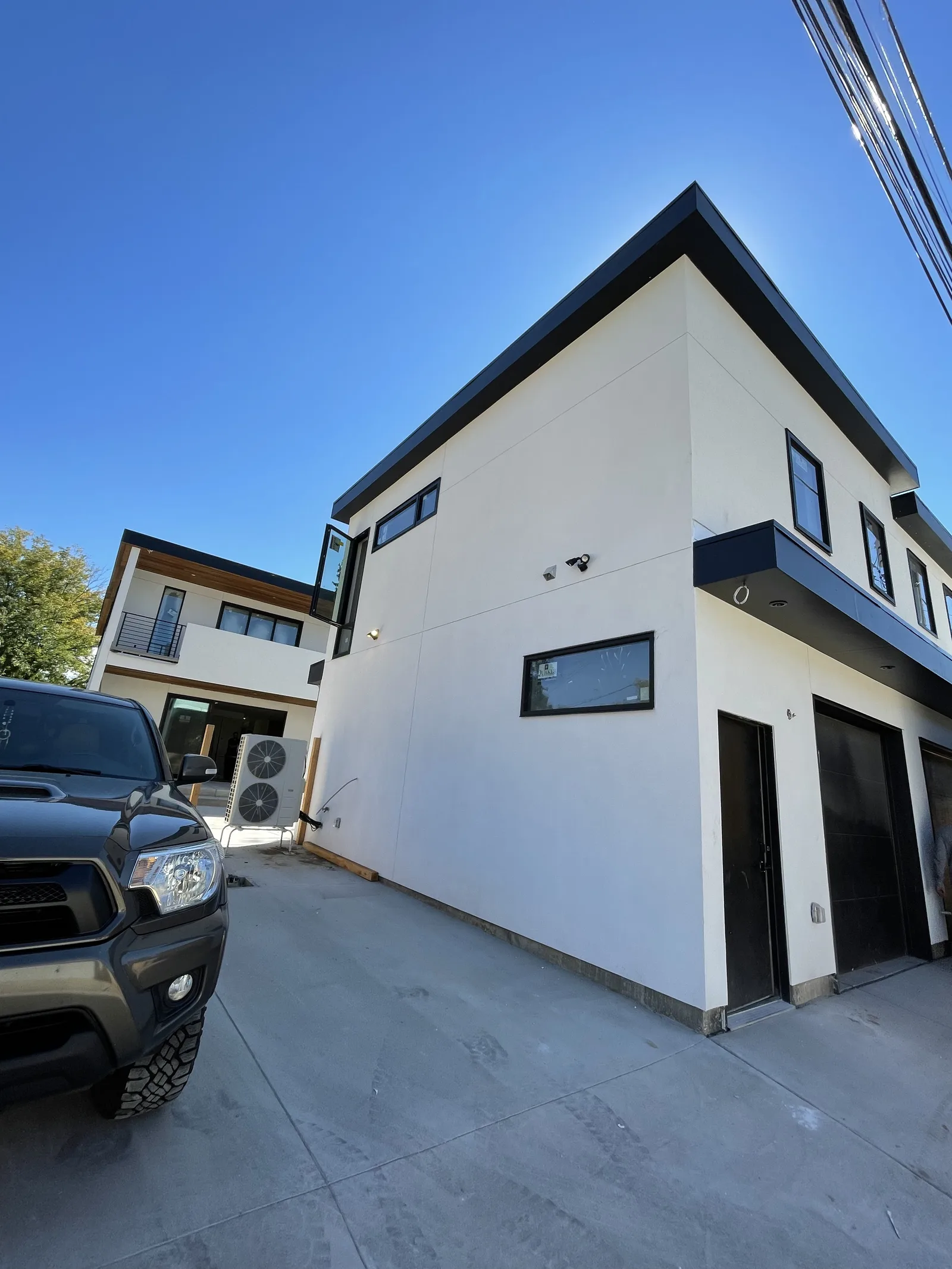
Stucco and EIFS-looking assemblies — Elastomeric only where appropriate; standard acrylic on sound stucco for most Denver homes. Hairline cracks get sealed before color.
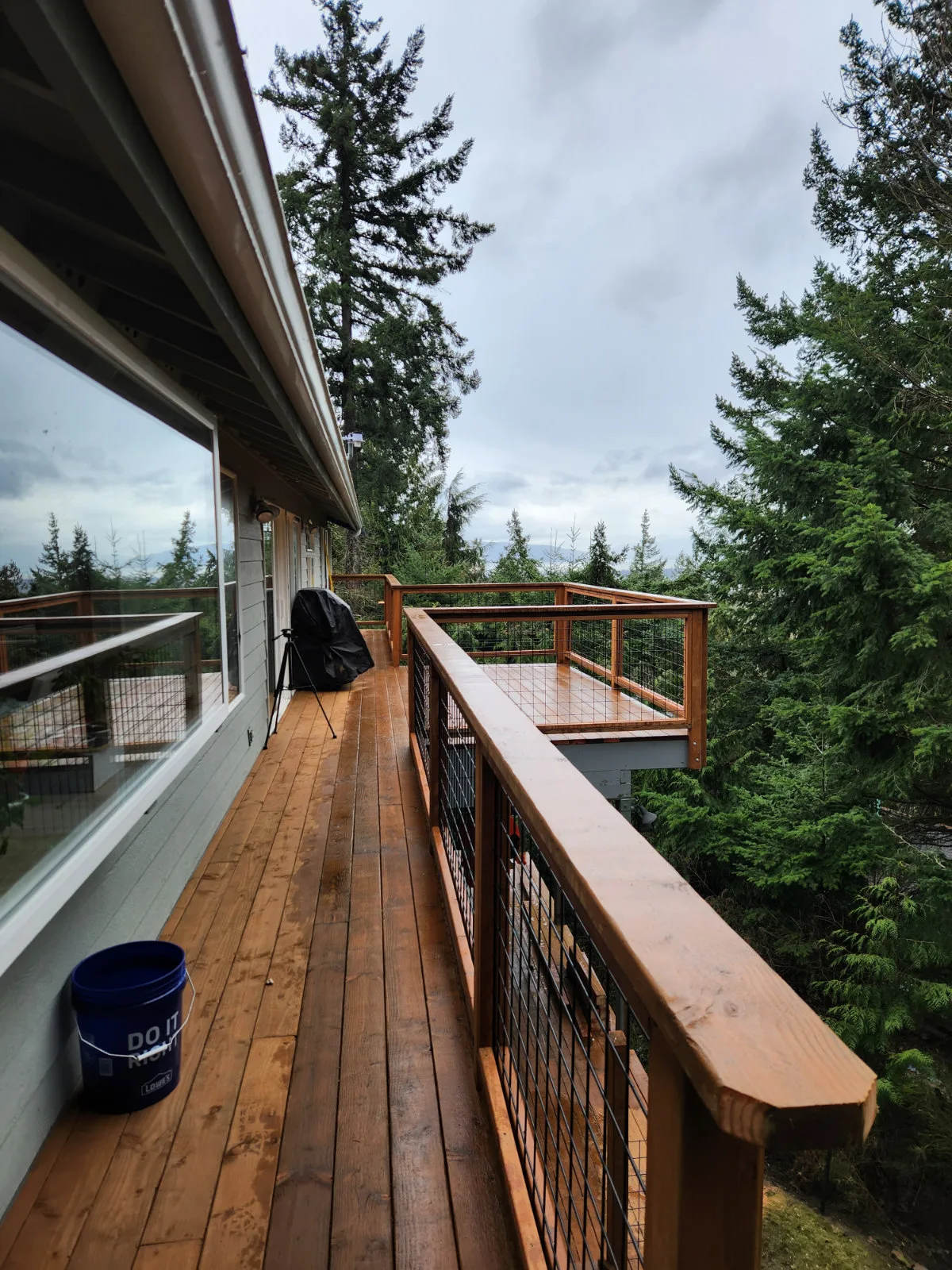
Wood trim and legacy lap — Sand to bright wood where rot is absent; replace rot before paint — paint preserves good wood, it does not resurrect mush.
Coatings for altitude sun
We specify Duration, SuperPaint, Aura, and Regal exterior lines depending on exposure and budget — higher solids and UV resistance on south and west elevations that take afternoon beatings. Sheen matters: too flat on trim holds dirt; too glossy on large fields shows every roller stop.
Trim and accent packages — Separate color on fascias, shutters, and front doors with coordinated sheen so the house reads intentional, not one color sprayed everywhere.
Interior painting — same crew, same standards
Interior work gets wall and ceiling packages, trim and door enamel, and cabinet-grade finishes where kitchens and baths need harder film. We protect floors, label colors by room, and back-roll sprayed walls for even texture.
Timing on the Front Range
Best exterior windows: Late spring through early fall — paint needs adequate cure temperature and dry nights. We avoid painting fresh latex in forecast freeze.
Book early — Quality crews fill May and June before hail season drives siding and paint demand together.
What we include in a quote
- Substrate inspection with photos of failing areas
- Line-item prep — wash, scrape, caulk, prime — not vague "prep included"
- Coating system by surface
- Color consultation when you want help narrowing options
- Cleanup and walkthrough before final payment
Peak Elevation Exteriors paints exteriors across the Denver metro and coordinates with our siding and trim crews when your project needs both new cladding and finish coat in one sequence.
Bottom line
Exterior paint in Colorado is a prep and specification project. The right gallons in the wrong order peel. The right prep with premium coatings buys years on south-facing walls that would destroy a big-box one-coat promise.
If your trim caulk is cracking, stucco is chalking, or the last repaint did not make five years on the west side, start with an inspection — not another bucket of the same mistake.