
01
Active roof leak
Call or text with your location and the conditions you are seeing. We confirm availability and safe access before scheduling; an online request does not reserve emergency dispatch.
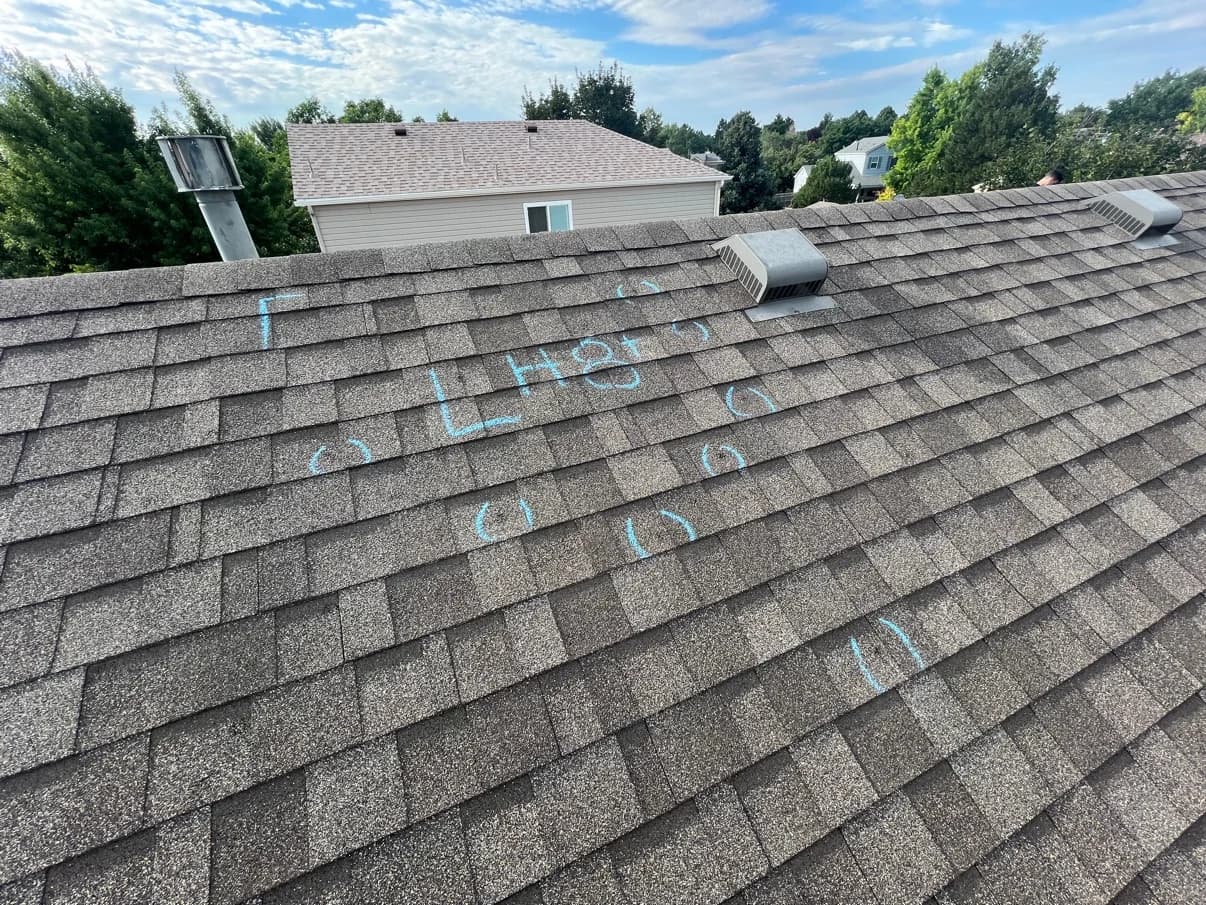
Get beyond the patch. Review leak history, roof condition and the surrounding details so you can choose a useful repair.
A ceiling stain shows where water arrived, not necessarily where it entered. We use the leak history and accessible roof details to identify a practical next step. Share when the leak occurs and what has already been tried.
Call or text with your location and the conditions you are seeing. We confirm availability and safe access before scheduling; an online request does not reserve emergency dispatch.
Previous invoices, patch locations and storm timing can help reveal why a leak persists. The issue may involve a transition, drainage or concealed damage beyond the visible patch.
Compare the condition of the surrounding roof, available matching materials and the limits of a localized repair. Wider deterioration may change the useful scope.
A useful repair starts with the leak history and the details around the visible problem. These separate detail views show the scale of information worth recording.
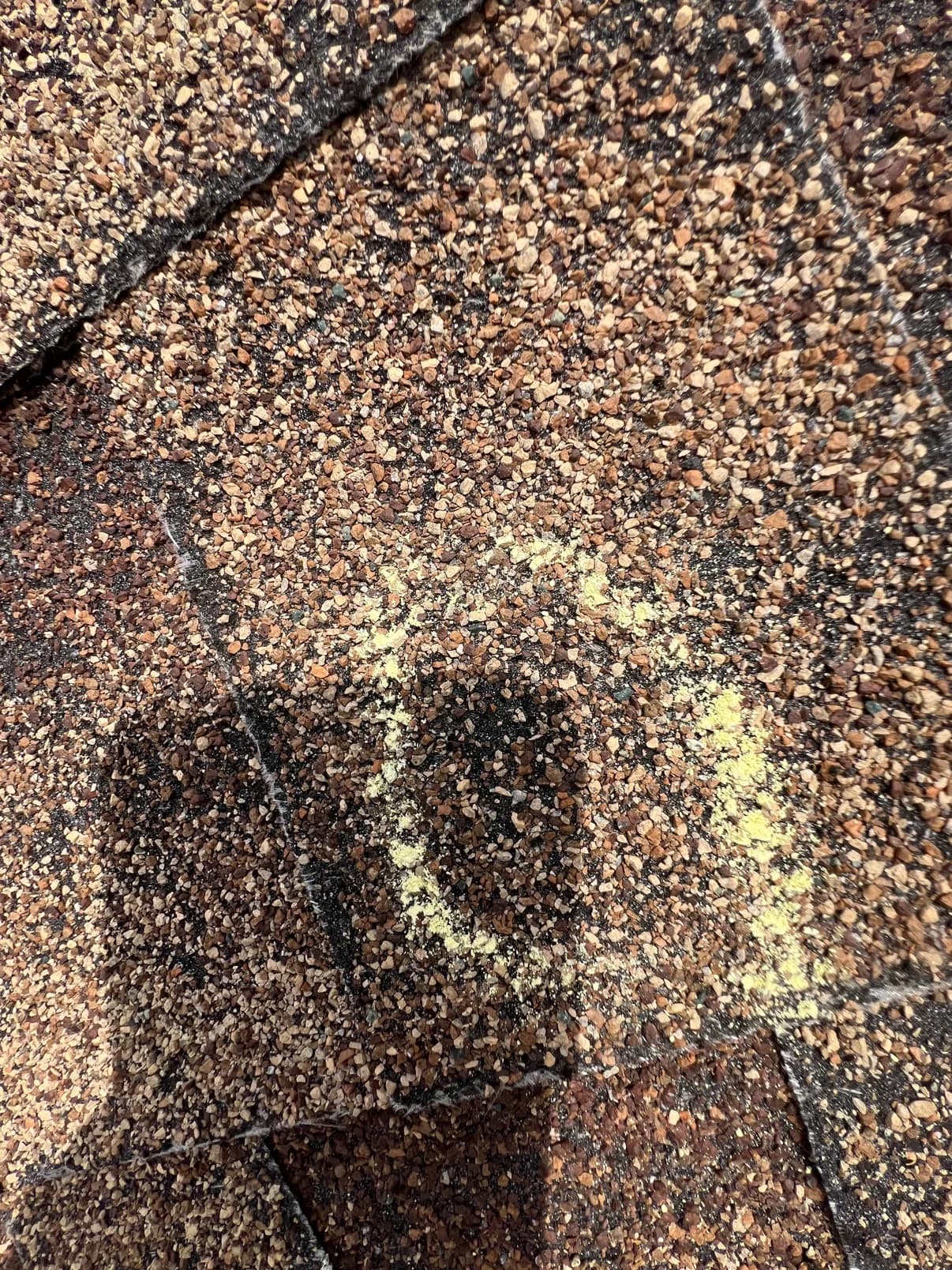 DETAIL VIEW / 01
Record when moisture appears, where it is visible and whether wind or recent work changes it.
Ask how the repair addresses nearby roof-to-wall, flashing and drainage details.
Put the repair location, compatible materials and related investigation into the written scope.
A good repair decision connects what you noticed to what was actually investigated. Record the pattern, the accessible evidence and the proposed repair boundary before turning a possibility into a diagnosis.
Project planning notes · Sources checkedNot necessarily. An interior stain locates the visible symptom; it does not, by itself, locate where moisture entered or establish that the roof covering caused it.
Describe the room, ceiling or wall affected and when moisture becomes visible. Keep a wide interior image as well as a close view. A useful investigation relates that location to exterior details and, when safely accessible and included, the underside of the roof.
GAF lists several possible roof-leak sources, including covering defects, flashing and drainage problems. Its condensation guidance also explains why attic moisture can resemble leakage. Do not treat a stain's shape, a single drone image or one wet day as a conclusive diagnosis. Ask the assessment to distinguish confirmed observations, working explanations and areas that remain inaccessible.
Primary referencesGAF: common roof-leak causes (opens in a new tab)GAF: condensation and roof moisture (opens in a new tab)
The timing helps direct investigation, but it does not identify one cause on its own. Wind, sustained rain, melting snow and cold-weather moisture can put different details under stress.
Keep a brief event log: the date, what the weather was doing, when dripping started and whether it stopped after the weather changed. Describe the facts without deciding that every winter stain is an ice dam or every rain-time stain is failed shingles.
A repeatable pattern is especially useful when the roof is dry during the visit. It gives the reviewer something to compare with the visible condition and previous work. Where testing or opening a concealed area is proposed, ask how it will be controlled, what it can establish and who authorizes it. Do not perform a roof water test yourself.
Scroll the comparison to see every column.
| Observation | Keep this detail | Question for the review |
|---|---|---|
| During wind and rain | Direction and delay before dripping | Which junctions need closer review? |
| After snow or a cold spell | Timing and affected interior areas | Leakage, condensation or another source? |
| After earlier repair | What changed and what did not | Was the original boundary sufficient? |
Primary referencesGAF: condensation and roof moisture (opens in a new tab)
It identifies the location, the affected connection, the work to be opened or removed and the compatible materials used to restore it. 'Seal the leak' is not a complete construction description.
Ask the proposal to name the roof area and the actual detail: a wall transition, valley, penetration, seam, edge or covering section. It should describe which adjoining materials remain and how the new work connects to them. Product family and existing condition matter when selecting a repair approach.
Keep appearance matching separate from water-management compatibility. A matching color does not establish that two materials or accessories belong in the same assembly. If a localized repair cannot be responsibly defined without further investigation, ask for that investigation as a separate decision with its own limits instead of an open-ended repair promise.
Scroll the comparison to see every column.
| Include | Explain | Avoid leaving implicit |
|---|---|---|
| Location | Marked area and detail | The entire roof |
| Removal | What is opened to reach it | Hidden restoration work |
| Reinstatement | Material and adjoining connection | Color as proof of compatibility |
Primary referencesGAF: the parts of a residential roof (opens in a new tab)NRCA: selecting a roofing contractor (opens in a new tab)
The next step should follow an agreed change process. New evidence needs a location, a proposed response and authorization; a small repair quote should not silently become permission for a much larger project.
Before opening work begins, ask how hidden deterioration or an inaccessible junction will be handled. Identify who receives photographs, how added quantities are established and what pricing basis applies. Where the condition requires structural or another specialist's assessment, record that handoff separately.
GAF notes that concealed deck damage can be discovered during roofing work. A photograph of deterioration supports a conversation, but it should be paired with an explanation of the repair extent and the connection to the original problem. Keep the original scope and approved revision together so the final invoice can be understood later.
Primary referencesGAF: roof decking and reroofing (opens in a new tab)
No. Temporary protection limits further exposure while a permanent solution is evaluated or arranged. Its purpose, expected follow-up and limitations should be described separately from the final repair.
An active leak may require immediate attention to property safety and protection before every cause is understood. Keep original photographs and any mitigation receipts. If insurance is involved, ask the carrier about its documentation requirements; reasonable protection does not remove the need for a construction assessment.
Weather, access, wet materials or unknown substrate conditions may affect what can be completed at a particular visit. Call to discuss current availability rather than assuming a response time from a service-page heading. Roof access and temporary covering belong with people and equipment suited to the conditions; do not climb onto a wet or damaged roof to create evidence.
Primary referencesNAIC: Post-Disaster Claims Guide (opens in a new tab)NRCA: roof repair after a hailstorm (opens in a new tab)
Compare the completed work with the agreed repair boundary and retain a record of the original symptom. Completion evidence should explain the work performed and any conditions that still need monitoring.
Ask for photographs that locate the repair as well as show its detail. Record what was removed, restored or left in place, and keep the relevant product or workmanship terms. If a controlled test was agreed, retain its method and limitations rather than treating it as proof against every future weather condition.
An interior stain can remain after the moisture source is addressed, so distinguish cosmetic restoration from the investigation of continuing wetness. Tell the team if the same symptom returns, including the date and conditions. A dated maintenance and repair history is more useful for the next reviewer than a sequence of disconnected patch invoices.
Primary referencesNRCA: roof-system maintenance (opens in a new tab)
A dated stain, drip, opening or damaged detail.
A possible water path or moisture source to check.
A defined repair, its limits and the next step if findings differ.
Use this checklist to prepare for your roof assessment.
An assessment should explain the condition of the surrounding roof as well as the visible damage.
A flashing detail, damaged section or isolated leak may be repairable when the surrounding roof is serviceable. Material compatibility and access matter.
Understand roof repairsWidespread deterioration, recurring problems or an assembly near the end of its useful life may change the decision. Compare the full scope before committing.
Plan a roof replacementA useful repair proposal identifies where the work starts and ends, what materials are used and which related conditions need further review.
Observed condition & repair location
Compatible repair materials & detail
Limits, related work & follow-up
Leak history and accessible roof assessment
Roof covering, flashing and penetration review
Valleys, wall transitions and drainage observations
Repair location and material specification
Concealed-condition limits and follow-up needs
Related gutter, fascia or interior repair options
Additional work and concealed damage follow the authorization process in your written agreement.
Yes. Denver’s published threshold compares 10% of the roof area with two roofing squares (200 square feet). Repairs exceeding the smaller amount need a roof permit. Check the actual work with the City; penetrations, structural work and historic properties can bring separate requirements.
Find your permitting authorityHave a question about your property?
Talk with our team
Call or text (720) 325-9473 to check availability. Stay off the roof. Keep clear of water near electrical equipment and areas with sagging ceilings or structural concerns. Photograph the interior from a safe location.
A localized repair may be suitable when the surrounding assembly is serviceable and the cause can be addressed. We review the repair limits, material compatibility and any access needed to surrounding details.
Weathering, discontinued colors and product availability can limit a visual match. We discuss available options and appearance differences before you approve the repair.
Interior drywall, insulation or paint is included only when identified in the proposal. First clarify the water-entry work, then coordinate any related restoration and concealed-condition investigation.
Share the Colorado location, what you need and when you need it. Our team will help you understand the next step.
(720) 325-9473Active leak? Call to confirm availability.