
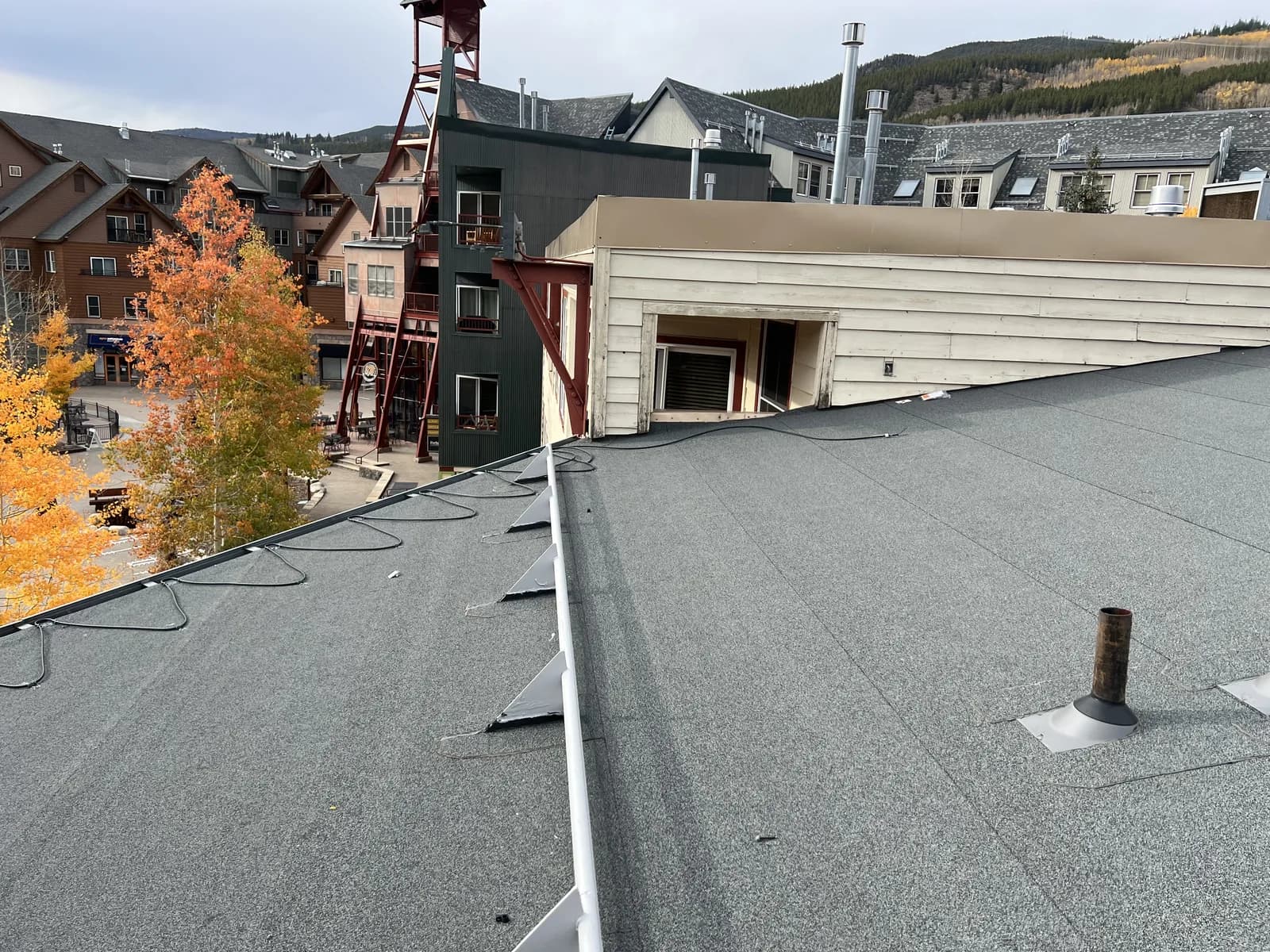
A commercial roof maintenance conversation is easier when the property has a usable record. “Water near the back drain” can mean different things on different days. Dates, locations, recent weather and previous work help a reviewer decide what to inspect and what a proposal should address.
For Denver and Front Range owners and property managers, the aim is a repeatable review process rather than an emergency patch cycle. Start with commercial roofing information or roof maintenance planning, then organize the property facts below.
Make a roof information file
Gather the roof type, approximate installation date, available drawings, previous repairs and actual warranty or guarantee documents. Add roof access arrangements and the contact responsible for approving work. If a record is missing, label the gap instead of filling it with an assumption.
Include rooftop equipment changes, solar installations, supports and recent trade access. An existing drain location on an old drawing may not explain how water moves around equipment added later. Keep service records from other trades with the roofing file so changes can be traced.
Map drainage from the roof to the outlet
Ask the roof reviewer to identify drains, scuppers, gutters, downspouts and any secondary drainage features that are present. The review should consider how water reaches those points and where it goes afterward.
Provide observations about debris, repeated wet areas and unusual discharge. Record when the water was seen relative to a rain or snow event. Do not diagnose structural loading or drill a new outlet based on a photograph. Access, fall protection and any roof work belong with the appropriate professionals.
The useful question is not simply whether a drain appears open. Ask whether the condition calls for routine cleaning, a repair to a component, a broader drainage investigation or another defined follow-up.
Distinguish maintenance from corrective work
A routine maintenance scope might address inspection, authorized debris removal and documented minor work. A corrective proposal may concern a membrane detail, drain connection, wet assembly or a drainage design problem. Ask the contractor to separate these categories.
GAF describes proactive maintenance as periodic inspection and scheduled repairs, rather than waiting for a critical problem. Its commercial maintenance guidance is a useful basis for a discussion, but it does not diagnose a particular roof.
Have the proposal identify quantities or locations, compatible materials, access assumptions and what investigation is included. A general instruction to “seal the roof” is difficult to verify against a later invoice or leak report.
Coordinate the trades that use the roof
Set an access and reporting process for HVAC, communications, solar and other contractors. Ask them to report suspected damage and route proposed penetrations or equipment changes through the responsible property contact before work proceeds.
Johns Manville's discussion of roof design and maintenance explains how future equipment and service needs belong in roof planning. That is a reason to coordinate changes, not evidence that every existing roof needs a redesign.
Keep before-and-after records of approved alterations. Ask which roof details require the manufacturer's review and who is responsible for that communication under the actual written agreement.
Set an inspection and reporting rhythm
Use the applicable manufacturer requirements and the property's exposure to set a schedule. Johns Manville recommends reviewing key roof areas at least twice yearly in its preventive-maintenance article. Additional checks may be appropriate after significant weather, damage reports or rooftop construction.
A useful report separates immediate concerns, planned repairs and items to monitor. Request dated photographs, locations and the proposed next action. Agree who will review the report, approve work and keep the record current rather than filing it without a decision.
Use a practical maintenance checklist
- Roof system and written coverage documents identified
- Access, safety arrangements and responsible contacts confirmed
- Drainage routes and observed problem areas recorded
- Equipment changes and trade traffic reviewed
- Maintenance separated from investigation and corrective repairs
- Priorities, exclusions, price and approval responsibilities written down
- Next review date and follow-up owner assigned
If water is entering the building, report it promptly and follow the property's emergency procedures. A scheduled review does not replace action on an active leak. Send Peak the building and roof details so the initial discussion starts with the actual property.